

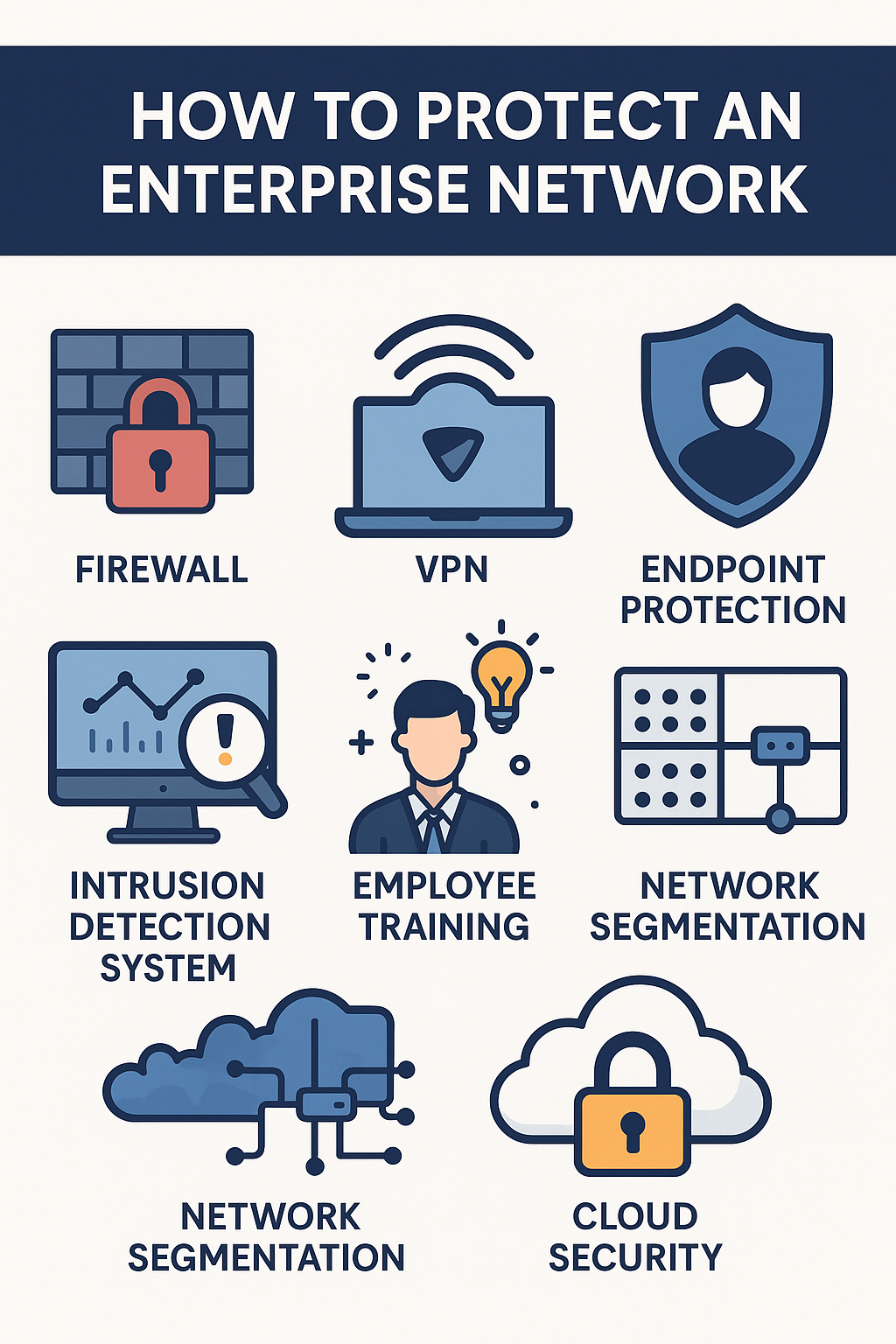
Your enterprise network is the backbone of your operations: it connects your teams, business applications, remote sites, and cloud services. When it is poorly protected, it becomes the perfect entry point for cybercriminals. Securing this network is no longer optional—it is a strategic priority.
1. Map Your Network and Critical Assets
The first step is understanding what you need to protect: servers, business applications, workstations, industrial equipment, connected objects, and more. A clear map of your network (sites, VLANs, VPN links, cloud connections) helps you identify the most sensitive areas and critical dependencies. Without this visibility, it is difficult to define priorities and consistent security policies.
2. Segment the Network to Limit Spread
A flat network where everyone can talk to everyone makes it easy for ransomware or intrusions to spread. Network segmentation—such as separating user, server, guest, production, and IoT environments—helps contain an attack within a limited zone. VLANs, access control lists (ACLs), and internal firewalls can all be used to enforce this segmentation.
3. Deploy a Next-Generation Firewall at the Core
A next-generation firewall (NGFW) is a central component for controlling flows between different network zones and the internet. It identifies applications, users, and advanced threats, and blocks anything that does not comply with your security policies. Combined with intrusion prevention (IPS) and encrypted traffic inspection, it significantly strengthens your network protection.
4. Secure Remote Access and Mobile Users
With remote work and mobility, more and more connections come from outside your physical offices. It is essential to use secure VPNs, multi-factor authentication (MFA), and, where possible, Zero Trust Network Access (ZTNA) solutions to give users access only to the resources they truly need.
5. Monitor Continuously and Respond Quickly
Protecting the network is not just about installing tools. You also need to monitor logs, detect abnormal behavior, and respond quickly when incidents occur. Centralized dashboards, real-time alerts, and ideally a SOC or managed security service help you maintain control.
Protecting your enterprise network means protecting your ability to serve customers, evolve your services, and innovate with confidence. By combining strong visibility, smart segmentation, next-generation firewalls, and continuous monitoring, you significantly reduce your attack surface. The Innova Shield team can support you at every step, from assessment to operational implementation.